OpenAI’s GPT-6.1 Terra, announced on 26 October 2026, offers a lower-priced option for computer-using and coding agents. The question for teams evaluating it now is whether cheaper model calls translate into less expensive completed work, after retries, tool execution and human corrections.
This is a closer look at that earlier release, not a new announcement. OpenAI’s release notes date the rollout to 26 October, with access through the API, ChatGPT Work and Codex.
What changes in the token bill
The standard API rates are $1 per million input tokens, $0.05 per million cached input tokens and $5 per million output tokens. Artificial Analysis lists predecessor GPT-5.6 Terra at $2 for input and $12 for output, making the reductions 50% and about 58%, respectively.
| Standard rate per million tokens | GPT-5.6 Terra | GPT-6.1 Terra |
|---|---|---|
| Input | $2 | $1 |
| Cached input | $0.20 | $0.05 |
| Output | $12 | $5 |
Those are token rates, not an all-inclusive workflow quote. OpenAI’s model documentation lists separate cache-write charges. Requests with more than 272,000 input tokens incur twice the input and cache rates and 1.5 times the output rate for the full request. Fast mode costs twice Standard; Batch and Flex have different rates.
That matters because the advertised 1.05-million-token context window is not all priced at the base rate. A large repository or accumulated agent history can change the economics before any additional retry is counted. API usage is billed separately from ChatGPT subscriptions.
Where developers and users can access it
OpenAI’s announcement names Plus, Pro, Enterprise and Edu access in ChatGPT Work and Codex. Its release notes explicitly distinguish those surfaces from Chat: Terra is not available in the ordinary Chat experience. They also say UAE inference residency is unsupported, a restriction on where processing runs rather than the user’s physical location.
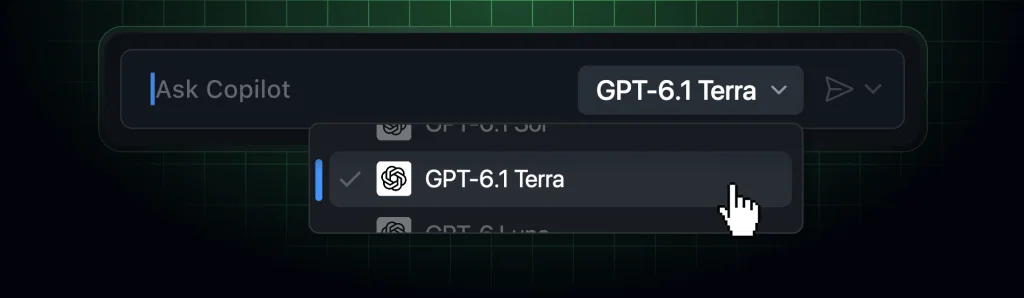
Developers can request gpt-6.1-terra through the API. The model documentation says tool calling requires the Responses API and lists computer use, hosted shell, apply patch and MCP support. Those capabilities still need an application or agent harness to provide tools, credentials and execution controls. Selecting a model does not itself grant access to a company’s systems.
GitHub separately announced Copilot availability on 26 October for Pro, Pro+, Max, Business and Enterprise users, including its CLI and cloud agent alongside supported editors and other surfaces. Rollout is gradual, and business administrators can control model access. GitHub says usage-based billing uses provider list pricing.
What OpenAI’s performance numbers establish
In its launch announcement, OpenAI reports 50.3% on Terminal-Bench 4.0 at maximum reasoning effort, versus GPT-5.6 Terra’s published 21.5%. On Agents’ Last Exam, it reports a 15-percentage-point improvement over its predecessor at medium effort at about one-third the cost.
OpenAI also reports completing tasks over three times faster than GPT-6 Astra and GPT-6.1 Sol in the computer-use evaluation discussed in its announcement. These are OpenAI-reported benchmark results, not AgentsCalling measurements or a promise about every desktop workflow. The company still recommends Sol and Astra for the most complex coding tasks.
The score, reasoning setting, tool environment and comparison baseline belong together. A terminal benchmark is not a percentage of production tickets that will be resolved correctly. Faster execution is also not necessarily cheaper accepted work if a task needs additional review or repair.
Independent evaluation supports efficiency, not universal leadership
In its 26 October evaluation, Artificial Analysis scores Terra at 48 on Coding Agent Index v2.0, below GPT-6.1 Sol’s 54. It finds Terra’s low and xhigh settings on the coding cost-efficiency frontier, while other settings sit behind it. This supports a workload-and-setting-specific value proposition, not a claim that Terra beats every larger model.
The evaluator also reports $0.40 per task for Terra versus $1.40 for GPT-5.6 Terra at maximum effort on its Intelligence Index evaluation. Those figures describe that evaluation, not a coding-agent deployment quote. They should not be presented as the cost of a completed customer workflow.
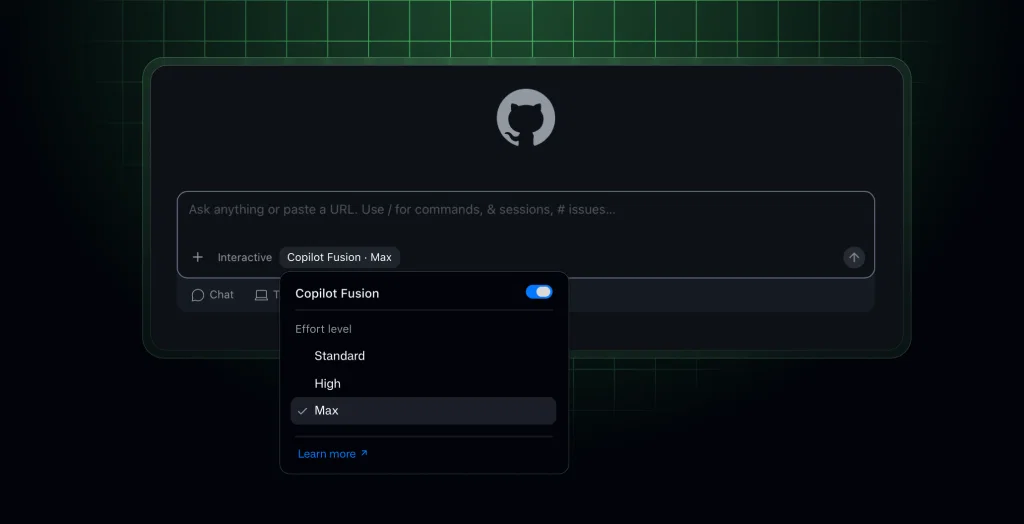
Our coverage of GitHub Copilot Fusion and Agentic Workflows examines another approach: allocating work across models. Terra’s lower rates give teams another candidate to evaluate within such routing decisions, not a reason to eliminate escalation for difficult cases.
The useful test is cost per accepted outcome
OpenAI illustrates the opportunity with invoices entered into accounting software, form filling and interpreting technical drawings. These are relevant agent use cases because software acts on information rather than merely generating an answer. They are examples of intended work, not independently verified customer outcomes in this article.
AgentsCalling’s analysis is that teams should compare identical, permission-limited tasks using the same harness. A synthetic invoice workflow could measure correct entries, duplicate prevention, approval before submission, total token and tool charges, elapsed time and human correction time. A disposable coding repository could add immutable tests and regression checks.
Our Gemini 4 Carbon coverage makes a related distinction between benchmark gains, access limits and measured engineering outcomes. Terra offers a different proposition: lower-cost access to routine computer and coding work. No Terra workflow testing has been performed by AgentsCalling. The practical decision remains cost per accepted outcome, not price per token alone.
About Puneet Sharma

Puneet Sharma · Freelance Writer
Puneet Sharma is a freelance writer covering AI agents, automation and the software changing how we work. His coverage at AgentsCalling starts with the questions a reader might ask over a conversation: What does this tool actually do? Where does it fall short? And is it useful beyond the demo? His articles explore new launches, practical workflows and the trade-offs behind giving software more responsibility, with explanations that make room for readers who are still getting familiar with AI.