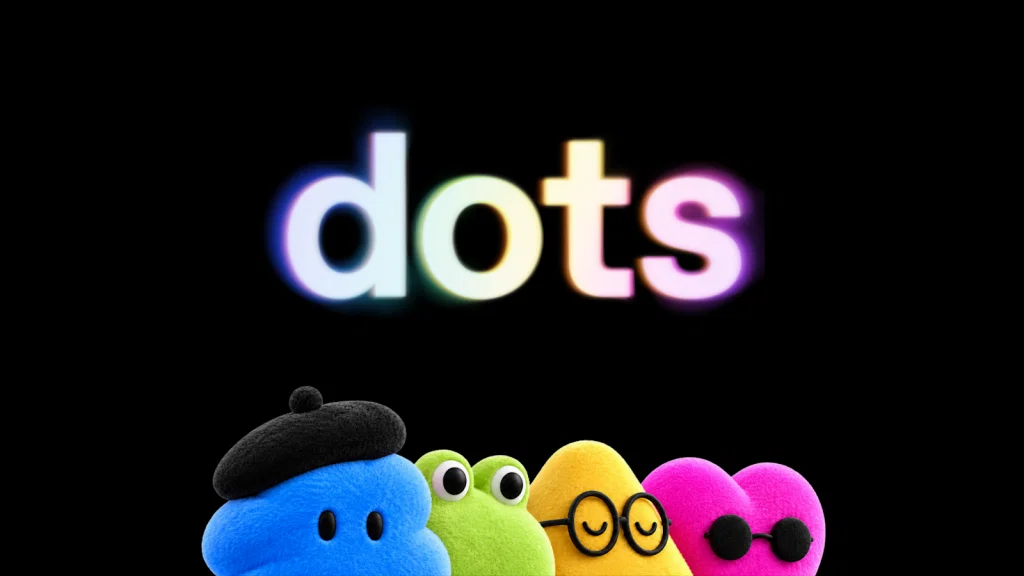
OpenAI has made its persistent personal agents, called dots, generally available to eligible ChatGPT Enterprise, Edu and Healthcare workspaces. The expansion includes an administrator preview through November 18, 2026, giving organizations time to review access before dots become available by default unless administrators opt out.
The change appears in OpenAI’s November 4 release notes. It is an expansion of an existing agent product, not a new model launch or an announcement first made today.
Background agents reach more organizational workspaces
OpenAI describes dots as agents that can continue working between conversations, using their own cloud computer and connected applications. Suggested uses include preparing presentations, researching projects and developing software for review. These are company-described capabilities, not independently measured outcomes.
That makes the product different from a chatbot that only responds to individual prompts. A dot can retain context and continue pursuing an assigned goal. Our AI agent vs chatbot guide explains why continuing work and taking actions create different operational responsibilities from answering questions.
During the preview, administrators must enable access. Making dots available does not automatically create an agent for every employee: members still complete onboarding themselves. Enabling dots also does not grant unrestricted access to connected services. Application permissions, approval settings and each provider’s authorization remain separate controls. Local computer access is off by default for Enterprise workspaces.
Residency and healthcare eligibility have boundaries
According to OpenAI, new dots support data residency and Enterprise Key Management, with inference residency in the United States and European Union. Workspaces requiring UAE data or inference residency are excluded.
OpenAI also lists dots as HIPAA-eligible in covered workspaces. That designation should not be read as blanket coverage for every workflow or connected third-party service, which retain their own restrictions. These are documented vendor provisions, not findings from an independent compliance assessment.
Pausing a dot does not necessarily stop all delegated work
One important limitation concerns shutdown and offboarding. OpenAI’s workspace administration guide says separate Work or Codex tasks, along with independently scheduled tasks, may continue after a dot is paused. Pausing does not reverse completed actions or delete stored information.
Our analysis: organizations should distinguish stopping the coordinating agent from stopping work it has already delegated. A visible pause state is not, by itself, confirmation that every related task has ended.
| Administrative action | What OpenAI documents | What still needs a separate check |
|---|---|---|
| Pause a personal dot | The member cannot resume an admin-paused dot until the admin removes that pause. | Delegated Work or Codex tasks and independent schedules may continue. |
| Remove dots access | Removing all applicable access grants pauses and disables the member’s dot. | App authorizations and website sessions are managed separately. |
| Delete a personal dot | Deletion removes the dot from the inventory and starts deletion of its own information. | Separately stored files and conversations are not deleted by that action. |
These are different administrative actions, not interchangeable versions of a universal stop button. A workflow inventory can help record the agent, its delegated jobs and the destination systems where results appear. Our AI-agent workflow examples explain why a finished conversation and a completed business process are different outcomes.
Preview access and delegated work have different billing
OpenAI’s getting-started documentation says dots are free to preview until November 18, when billing begins for enabled dots. Work delegated to ChatGPT Work or Codex threads is billed separately at standard rates.
For procurement teams, this means the agent’s own charge and the work it starts should be examined separately. Our AI agent pricing guide explains why runtime, integrations and human review can belong to different parts of an operating budget.
The enterprise question is control over continuing work
For enterprise buyers, the consequential change is not simply another assistant becoming available. It is the introduction of agents that can keep working while their owners are doing something else.
Proposed test, not performed: in an authorized sandbox using synthetic data, assign a harmless task, pause the dot, and inspect delegated jobs, schedules and connector permissions separately. Record which controls stop which work and whether any background job remains active.
That evaluation would help distinguish documented controls from their operational behavior, without assuming that a pause button is a universal shutdown mechanism. We have not conducted this test or independently benchmarked dots’ reliability.
Reporting note: Prepared with AI-assisted research and drafting. OpenAI’s Enterprise and Edu release notes dated November 4, 2026, workspace administration guide and getting-started documentation were reviewed on November 7, 2026. The exact announcement time and timezone were not supplied. Availability and controls may change. Company descriptions, AgentsCalling’s analysis and the proposed test are distinguished above; no independent product or compliance testing was performed.
About Puneet Sharma

Puneet Sharma · Freelance Writer
Puneet Sharma is a freelance writer covering AI agents, automation and the software changing how we work. His coverage at AgentsCalling starts with the questions a reader might ask over a conversation: What does this tool actually do? Where does it fall short? And is it useful beyond the demo? His articles explore new launches, practical workflows and the trade-offs behind giving software more responsibility, with explanations that make room for readers who are still getting familiar with AI.