Meta declined an offer to jointly test Muse with the UK’s Financial Conduct Authority before its British launch, WIRED reported on November 26, citing FCA innovation head Colin Payne. He said the proposal came the previous week and that arranging tests normally takes weeks or months. Meta told WIRED it had engaged constructively with regulators and would continue doing so.
The dispute concerns cooperation on testing, not a published finding that Muse failed a regulatory assessment. The distinction matters for anyone deciding how much authority to give an agent that can act through shopping sites, email and other connected services.
Muse’s UK rollout was confirmed by the Competition and Markets Authority on November 24. Our earlier UK launch coverage examined checkout controls. This development puts the evidence behind those controls, and who gets to examine it, in focus.
Meta Muse UK testing is not the same as regulatory approval
A sandbox provides a controlled setting for examining a product or use case. It is not a general safety certificate. The FCA’s Supercharged Sandbox documentation explicitly says participation does not constitute approval, endorsement or authorisation. Its current programme includes work on safer agent-led payments and commerce.
That programme explains the difference between experimentation and permission to provide financial services. It does not establish which sandbox, test plan or timetable was proposed to Meta. We have not located a published invitation, agreed testing protocol or completed joint assessment for Muse.
Our analysis: declining one proposed test does not prove that a product is unsafe, just as joining a sandbox would not prove it safe. The useful follow-up is what independent evidence users and regulators can examine about the actions an agent takes.
An agent’s actions matter more than its technology label
The FCA’s November 24 agentic AI guidance says technology providers must consider the activities their products actually perform. Calling a business a technology company does not remove an authorisation requirement where regulated financial services are involved.
It identifies payment services, financial promotions, credit intermediation and financial advice as areas providers may need to consider. For regulated firms, responsibility remains with the firm and its senior managers even when a third-party agent is involved. Firms should understand autonomy, consent, permitted actions and how customers receive support if something goes wrong.
This is not a determination that every shopping assistant performs regulated activity. For a builder, the practical task is to map each action and each partner’s role rather than infer a legal status from the conversational interface.
Meta’s approval promises need to match the user journey
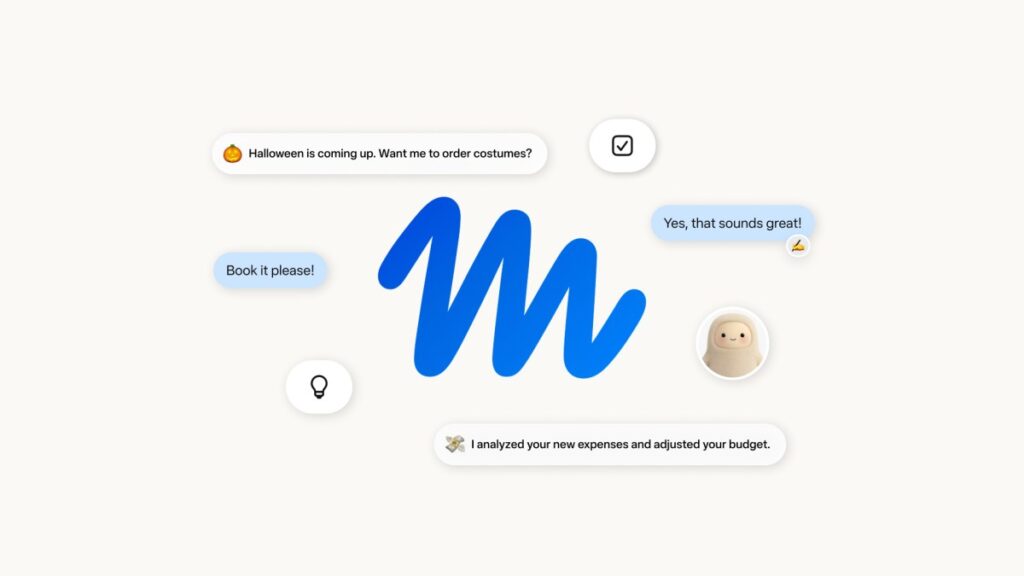
In its UK controls explanation, Meta says Muse waits for approval before sensitive actions such as sending email or buying something. It describes a separate security agent that checks actions and outgoing information against granted permissions. Users can inspect activity and take over web tasks. These are Meta’s descriptions, not results from an AgentsCalling test.
The CMA’s launch statement adds a separate consumer-protection requirement: marketing, terms and actual behaviour should agree. It says Meta changed its terms following engagement and that discussions continue. Customers should understand access and autonomy choices, with no unexpected allocation of responsibility if things go wrong.
Our reporting on Walmart’s Muse checkout shows why the scope of approval matters. A spending ceiling and approval of an individual order answer different questions. That US retailer integration is context, not evidence that its controls or availability carry over to the UK.
A useful test would stop before the purchase
AgentsCalling’s proposed evaluation would use an eligible, consenting UK tester and a small synthetic shopping task. Ask the agent to prepare a basket within an explicit budget, then inspect the seller, quantity, total and delivery conditions before rejecting approval. Check that rejection stops the transaction and that changing the basket cannot silently reuse permission for a different order.
A second exercise would revoke access to a connected test account and check the next task, activity history and escalation message. No purchase or access to another person’s data is needed. Neither exercise has been performed by AgentsCalling.
The outstanding question is not whether Muse sounds capable. It is whether a person’s limits survive the complete journey from instruction to action, and whether there is a clear route to investigate and resolve a mistake.
Reporting checked November 27, 2026. The joint-testing account is attributed to WIRED; FCA and CMA publications establish the regulatory context, not independent confirmation of that private exchange. This article is research-based, with no hands-on Muse test.
Disclosure: This article was edited by Puneet Sharma. For more information on how we create and review content, see our Editorial Policy.
About Puneet Sharma

Puneet Sharma · Freelance Writer
Puneet Sharma is a freelance writer covering AI agents, automation and the software changing how we work. His coverage at AgentsCalling starts with the questions a reader might ask over a conversation: What does this tool actually do? Where does it fall short? And is it useful beyond the demo? His articles explore new launches, practical workflows and the trade-offs behind giving software more responsibility, with explanations that make room for readers who are still getting familiar with AI.