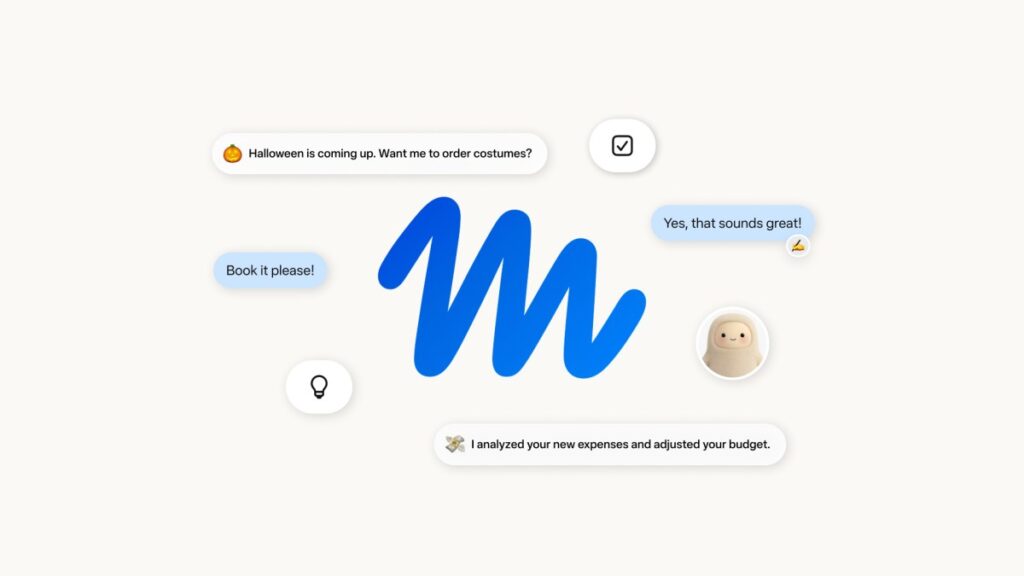
Meta’s Muse can now call US businesses for paying users, giving its personal AI agent another way to handle errands that cannot be finished through a website. The wider rollout puts restaurant enquiries and customer-service calls behind a subscription, with Muse plans starting at $20 a month.
The useful question is not just whether an AI can speak on the phone. It is what the subscription buys, which tasks you can delegate and what happens when a business asks the agent to make a decision you have not approved.
What changed in the Muse calling rollout?
Meta’s Alexandr Wang announced expanded access on November 12 US time. Outbound calling had already been tested with a smaller group in September; the current development is access for paid US subscribers, not the invention of a new calling capability.
Wang’s examples included insurance enquiries, cable-provider calls, DMV-related tasks and restaurant reservations. These are examples of the work Meta is pitching, not a published guarantee that every organisation will accept an AI caller or that every task can be completed.
How much does Muse calling cost?
Meta’s subscription documentation lists the following plans. The calling rollout is for paid US subscribers, while subscription benefits can vary by account and region.
| Muse plan | Monthly price | Weekly Muse token allowance |
|---|---|---|
| Power | $20 | 500 million |
| Maximum | $100 | 3 billion |
The free version of Muse has usage limits, but this calling announcement does not extend outbound business calling to free users. The published token allowances are not call-minute bundles. The subscription page reviewed does not give a guaranteed number of calls, a minute allowance or a per-call price.
That distinction matters before upgrading: a large token allowance alone does not tell you how many lengthy customer-service calls it will cover. Check the benefits offered to your specific account rather than assuming a particular call quota.
Meta says subscriptions can be purchased through the mobile app or muse.ai using a Meta account. They renew monthly unless cancelled. Subscribers must meet its location and minimum-age requirements. The US calling rollout is not confirmation of availability in India.
What could you ask it to do?
The strongest use cases are bounded errands with a clear answer or outcome. A restaurant enquiry has a different risk profile from a call that changes an insurance policy or authorises a charge.
| Illustrative request | Useful boundary to set |
|---|---|
| Ask a restaurant about a table for four. | Specify date, time window and whether deposits are allowed. |
| Ask a provider about a bill. | Request an explanation or quote; do not authorise a new contract. |
| Check appointment availability. | Specify acceptable slots and require confirmation before a paid booking. |
These are our suggested task boundaries, not examples we have tested in Muse. A practical instruction might be: “Ask whether a table for four is available between 7pm and 8pm on Friday. Do not agree to a deposit or cancellation charge. If either is required, bring the details back to me.”
Business calling is different from Muse Voice
Muse Voice lets you talk to the agent. Outbound calling lets the agent contact a business for you. One is a conversational interface; the other delegates a task involving another person.
The distinction explains why a voice-chat demo is not evidence of successful business calling. The latter involves an external recipient, potentially changing information and a real-world outcome. Our guide to AI agent examples explores this broader shift from answering questions to taking actions.
What the earlier human-concierge test tells us
There is relevant history behind the calling promise. Reuters reported on September 22 that Meta had tested contractors handling some Muse phone requests. Its report cited internal concerns over disclosure and sensitive information, and said an executive acknowledged the disclosure problem and rolled back that human-concierge feature.
That was a September experiment, not proof that November subscribers’ calls are being routed to contractors. Equally, the current announcement should not be used to erase the earlier distinction between AI calling and human-assisted fulfilment. Before delegating sensitive tasks, users need a clear explanation of who can access the request and conversation.
How does it compare with other calling agents?
Muse is not first into this category. Google’s Call for Me and Instinct Concierge provide relevant alternatives, but shared calling functionality does not establish identical access, permissions or task coverage.
For a useful comparison, ask four concrete questions: Does the service support your location? Can it contact the business you need? What changes require approval? What record confirms the outcome? Choosing only by voice quality misses the part of the product that actually matters: completing the right task within the authority you gave it.
Is it worth paying for?
Our assessment: Muse calling is most interesting for eligible US users who regularly have simple, time-consuming business enquiries. Someone who only needs occasional voice chat should not confuse that need with paying for delegated phone tasks.
Before using it for account changes, healthcare details or financial commitments, start with a low-stakes enquiry. Check the result yourself and keep permission narrow. We have not performed a hands-on calling test, so this is an assessment of the documented offer, not a product review or a measured time-saving claim.
The unresolved buying question is straightforward: how consistently does a subscription turn a phone request into a correctly confirmed result? Published plan prices answer what entry costs. They do not yet answer reliability, call capacity or the cost per successfully completed task.
Sources and timing: Meta’s subscription documentation was checked on November 13, 2026. Reporting reviewed included TechCrunch (November 13, 03:52 IST), Android Authority (November 13, 13:28 IST), Engadget, and Reuters’ September 22 human-concierge report via Euronext syndication. Wang’s November 12 US-time announcement was available through embeds; direct X access was blocked. No calls or subscriptions were tested for this article.
About Puneet Sharma

Puneet Sharma · Freelance Writer
Puneet Sharma is a freelance writer covering AI agents, automation and the software changing how we work. His coverage at AgentsCalling starts with the questions a reader might ask over a conversation: What does this tool actually do? Where does it fall short? And is it useful beyond the demo? His articles explore new launches, practical workflows and the trade-offs behind giving software more responsibility, with explanations that make room for readers who are still getting familiar with AI.