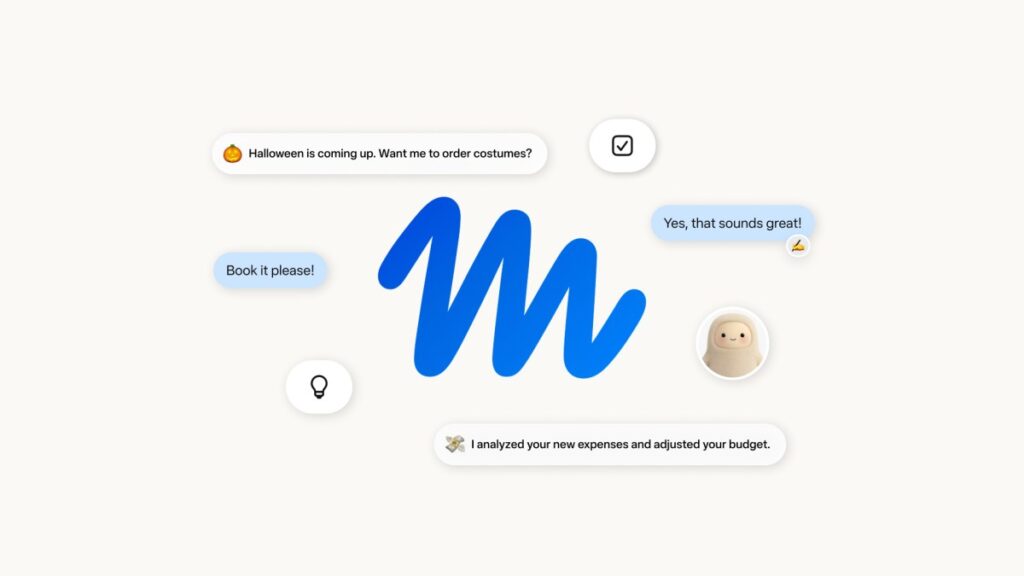
Meta is bringing Muse to the UK, the Guardian reported on November 24. The expansion gives British users another route into personal agents that act through connected services, rather than only answering questions.
The practical question is what a user authorizes once the agent reaches a shop or inbox. Meta’s own documentation distinguishes general connector permissions from purchase approval, and warns that availability can differ by feature and location. A country launch should not be read as a promise that every task works everywhere.
What changes with the UK launch?
The Guardian’s launch report describes arrangements with British retailers and easyJet to help Muse navigate their sites. That is not an independently measured checkout-success guarantee.
For merchants, an agent may become another customer-facing channel. Our analysis: the useful question is not whether a store appears in a launch announcement, but whether its product information, checkout terms and order confirmations remain accurate when software operates the journey.
For users, separate basic access from a specific capability. Our earlier coverage of Muse calling US businesses concerns a different rollout. It does not establish that outbound business calling is included for UK users. We have not verified a complete UK feature matrix, local subscription prices or account-by-account availability.
Purchase approval is a separate checkpoint
Meta’s payment guidance says Muse asks before completing a purchase. It tells users to check the details and merchant terms on the merchant’s website before approving. Purchasing support varies with location, merchant and checkout flow; merchants fulfil the orders.
The same guidance describes paying through Link by Stripe or an account’s saved card. These are documented payment paths, not confirmation that both are available to every new UK account. Meta also tells users to watch receipts, statements and email confirmations.
Our analysis: an approval screen and a confirmed order answer different questions. Approval records what a person permits; a merchant confirmation establishes what was actually accepted. If the final result is unclear, checking the order record before retrying is safer than assuming that a conversational “done” settles it.
“Ask” settings have different scopes
In its guidance and approval documentation, Meta distinguishes read actions, such as checking a calendar, from write actions, such as sending a message. Connector defaults can require approval for some actions or for every action. Website access has its own settings.
Approval options can apply once, for a task, for a website or persistently for a connector. Users can inspect action history and revise permissions. Meta warns that some actions, including sending an email, cannot be reversed.
This is why “the agent asks permission” needs a follow-up question: permission for which action, for how long and with which data? Our examination of persistent agent permissions explains how broad authorization can differ from a user’s expectations. A successful login does not itself specify every permitted action inside an account.
Privacy controls are not the same as a safety guarantee
Meta’s privacy and security documentation says credentials are kept in a separate store and important permission checks operate outside the AI model. It describes user environments as isolated virtual machines and says Muse conversations and VM data are not shared with Meta’s ad systems.
Those are company descriptions, not an independent audit. The same page says the setting allowing interactions to improve AI models starts enabled and can be switched off. It also describes a Confidential VM that would keep information private even from Meta as a future choice, not the default environment available today.
Keeping information out of advertising systems and keeping it out of model improvement are different commitments. New users should inspect both controls rather than treating either as a general promise that no data is retained or processed.
The UK checkout test worth running
With an eligible, consenting UK tester, we would compare a supported retailer with an ordinary website and ask Muse to prepare a small, tightly bounded basket. Before any real purchase, the tester would inspect seller, total, delivery details and recurring-payment terms, then reject the first approval request.
The checks would be whether rejection stops the transaction, whether a changed basket requires renewed purchase approval, and whether the merchant’s order record matches the approved details. A second exercise would revoke a connector and check that later tasks respect the new boundary. These are proposed tests; we have not run them.
The launch matters because personal agents are entering another significant shopping market. Their usefulness will depend on the consistency of permissions, merchant access and final outcomes, not simply on how fluent the conversation sounds.
Reporting checked November 24, 2026. A separate Meta UK launch announcement and a complete local eligibility and pricing list were not located. AgentsCalling did not run the proposed tests.
About Puneet Sharma

Puneet Sharma · Freelance Writer
Puneet Sharma is a freelance writer covering AI agents, automation and the software changing how we work. His coverage at AgentsCalling starts with the questions a reader might ask over a conversation: What does this tool actually do? Where does it fall short? And is it useful beyond the demo? His articles explore new launches, practical workflows and the trade-offs behind giving software more responsibility, with explanations that make room for readers who are still getting familiar with AI.